




The Development of Hot Melt Coatings
【Summary Description】 Hot melt coatings are different from other road markings; they do not contain volatile solvent components. During construction, the powder coating is heated and melted, then applied to the ground using specialized equipment, solidifying into bright markings. Therefore, its film-forming mechanism does not rely on the solvent evaporation typical of ordinary coatings, but rather on physical solidification and curing. Due to the characteristics of hot melt coatings, such as ultra-fast drying during construction, durability, strong wear resistance, and nighttime reflectivity, their application range and uses are expanding year by year. They are most suitable for urban roads and major highways with heavy traffic, and are also used as reflective markings on highways in some countries in China and around the world.
Thermoplastic CoatingUnlike other road markings, thermoplastic coatings do not contain volatile solvent components. During construction, the powder coating is heated and melted, then applied to the ground with specialized equipment, solidifying into bright markings. Therefore, its film-forming mechanism does not rely on solvent evaporation like ordinary coatings, but rather on physical solidification and curing. Due to the ultra-fast drying, durability, strong wear resistance, and nighttime reflectivity of thermoplastic coatings during construction, their application range and uses are expanding year by year. They are most suitable for urban roads and major highways with heavy traffic, and are also used as reflective markings on highways in our country and some other countries around the world.

Due to the fact that the film thickness of thermoplastic coatings is much greater than that of other coatings (the amount of thermoplastic coating with a thickness of 1.5~2mm is about 4~5kg/m2), although the unit price of thermoplastic coatings is cheaper than that of other coatings, the cost per unit area is quite high, generally several times higher than that of ambient temperature coatings, making it less suitable for economically underdeveloped areas. In addition, thermoplastic coatings have higher requirements for road conditions and are best used on new roads. They are not suitable for asphalt pavements that have long-term aging and cracking. Furthermore, since thermoplastic coatings require heating during construction, the construction equipment and process are relatively complex, requiring more investment.
Our country’sRoad Marking Construction CoatingsThere are ambient temperature coatings and thermoplastic coatings, both of which are in the development stage and have a significant gap compared to developed countries. Our research direction for road marking construction coatings is to use advanced instruments and equipment such as computers, under the guidance of modern scientific theories, to purposefully develop chemical raw materials such as resins for coatings, and to manufacture specialized resin materials for road marking construction coatings using modern synthesis methods such as copolymerization, modification, and splicing, thereby researching new types of road marking construction coatings with outstanding performance, low price, and suitability for our country’s roads.
Our main goal is to improve the wear resistance and water resistance of the coating while ensuring the basic performance of the coating, reducing the amount of solvent evaporation during construction, and increasing the adhesion of the coating.
Thermoplastic coatings are in powder form at room temperature and do not contain volatile solvents. They are heated and melted during construction, then applied to the ground with specialized equipment, solidifying into a film through physical solidification.
The usage effect is excellent.
(1) The film has quick-drying properties. It can dry and allow traffic within 1-3 minutes after painting, and can even be constructed without blocking traffic.
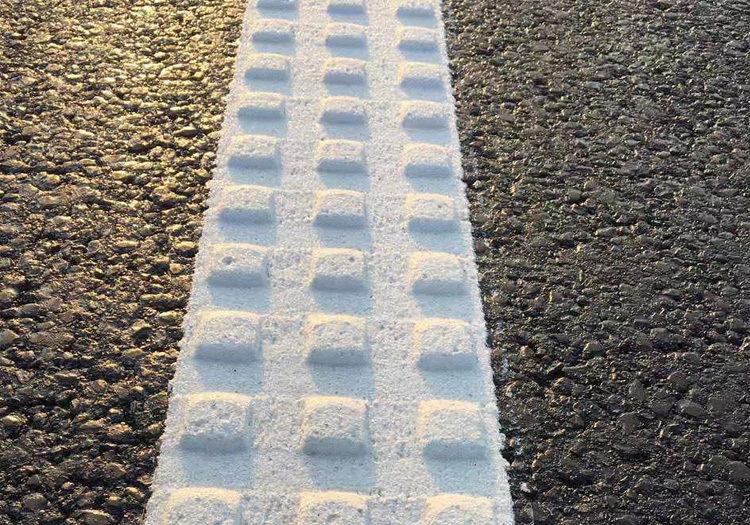
(2) Good usage effect. The film line of the thermoplastic coating is complete and clear, with sharp edges, high brightness, and strong three-dimensionality.
(3) Excellent wear resistance. The coating film is durable, and the lifespan of the markings can reach 2 years.
(4) Nighttime reflectivity. By adding glass reflective materials to the thermoplastic coating, glass beads can scatter on the surface of the coating during construction, resulting in better reflective effects, reducing traffic accidents, and meeting modern traffic needs.
To learn moreRoad marking coatings, reflective thermoplastic marking coatingscontent, you can follow us.
Related News


Convenient Navigation
Contact Us
Address: Kechuang Industry,Tianyi Village,Dongcong Town, Nansha District, Guangzhou City, Guangdong Province, CHINA
+86 13427557901 Ms Vivian
( Whatsapp/Wechat/Line:008613427557901 Skype:vivian34686 )
online message