
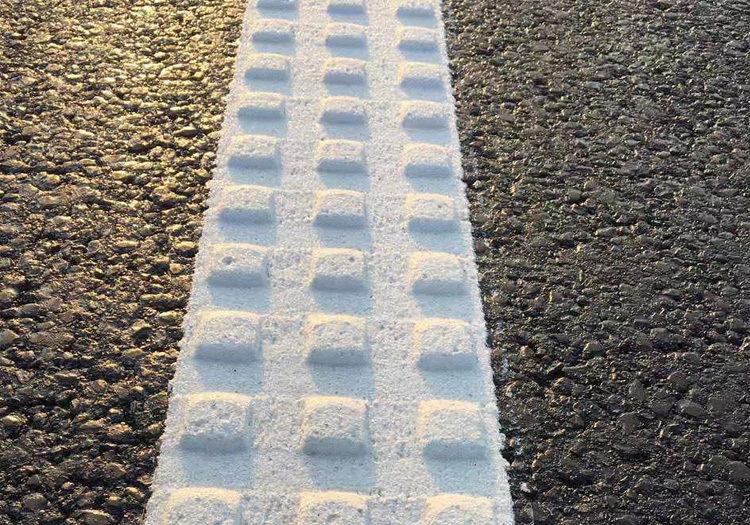
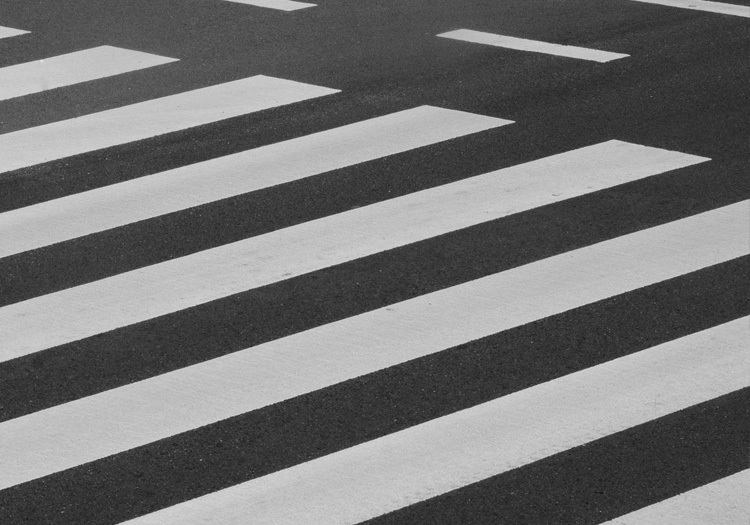



Why do bubbles form when using road marking construction paint?
【Summary Description】 Those who pay attention to road marking construction paint know that bubbles often appear during the application of road marking construction paint. Although such defects do not affect the service life, they can affect aesthetics upon close observation. So why do bubbles occur when using road marking construction paint?
AttentionRoad marking construction paintPeople who are concerned know that bubbles often appear during the application of road marking construction paint. Although such defects do not affect the service life, they can affect aesthetics upon close observation. So why do bubbles occur when using road marking construction paint?

1. Air in the pavement gaps is heated: When the material temperature is around 200 degrees, applying road marking construction paint on the pavement to form markings requires 3-8 minutes to dry. During this time, the air in the thin cracks of the pavement is heated and expands to the top. Raising the material temperature by 5-10 degrees improves the leveling of the coating and reduces the viscosity, allowing bubbles to escape; or lowering the material temperature by 5-10 degrees increases the viscosity of the coating, preventing bubbles from rising and remaining in the markings.
2. Bubbles occur when the ground is wet: Moisture in the wet pavement can evaporate when heated, producing bubbles. Therefore, construction can only be carried out after the pavement is dry, especially paying attention to the humidity of the pavement in the winter mornings and evenings.
3. Modified asphalt is prone to bubbling when heated: High-grade highway road marking construction paint, such as that used on highways, often uses modified asphalt, which frequently produces bubbles when the modifier is heated. However, according to Kaitengda, we can add about one thousandth of soybean oil (or salad oil) during the material heating process, sacrificing the compressive strength of the markings to improve the leveling of the material and reduce bubbles, meeting the owner's requirements.
4. Bubbles can also occur if the base oil is not dry: Before the base oil dries, the solvent in the base oil has not completely evaporated, and heating during evaporation can produce bubbles. Only after the base oil is completely dry can hot melt marking paint be applied; otherwise, in addition to easily producing bubbles, it can also lead to the explosion of undried base oil, causing accidents!
5. Strongly alkaline cement pavements are prone to bubbling; we can only overcome this by cleaning floating dust and applying a secondary base oil! Just reduce, not eliminate!
6. There are many loose bubbles on the cement pavement. When encountering such a pavement, the application of road marking construction paint can only rely on secondary base oil and adjusting the material temperature to balance.
Road marking construction paint is composed of petroleum resin, EVA, PE wax, pigment fillers, etc. It is in powder form at room temperature, melts and flows when heated, and then is applied to the pavement to form a strong coating. It features full lines and strong wear resistance. Due to its good night reflection effect, it is widely used on highways and urban roads.
Additionally, attention should be paid during the application of road marking construction paint:
1. To ensure the working surface is clean and dry, it is recommended to apply at temperatures above 0 degrees (for low-temperature applications, please appropriately raise the material temperature).
2. When the coating is melting, the temperature should be controlled between 180-200 degrees. After melting, it should be stirred thoroughly and heated for 3-5 minutes before discharging to fully reflect the performance of the hot melt coating.
3. The base oil should be fully treated, and the marking should be applied only after the base oil is completely dry.
For newly completed cement roads, it is advisable to postpone construction for at least three months or perform secondary base oil treatment. Otherwise, the markings are likely to fall off. To learn moreRoad marking paint, hot melt paintcontent, you can follow us.
Related News


Convenient Navigation
Contact Us
Address: Kechuang Industry,Tianyi Village,Dongcong Town, Nansha District, Guangzhou City, Guangdong Province, CHINA
+86 13427557901 Ms Vivian
( Whatsapp/Wechat/Line:008613427557901 Skype:vivian34686 )
online message