
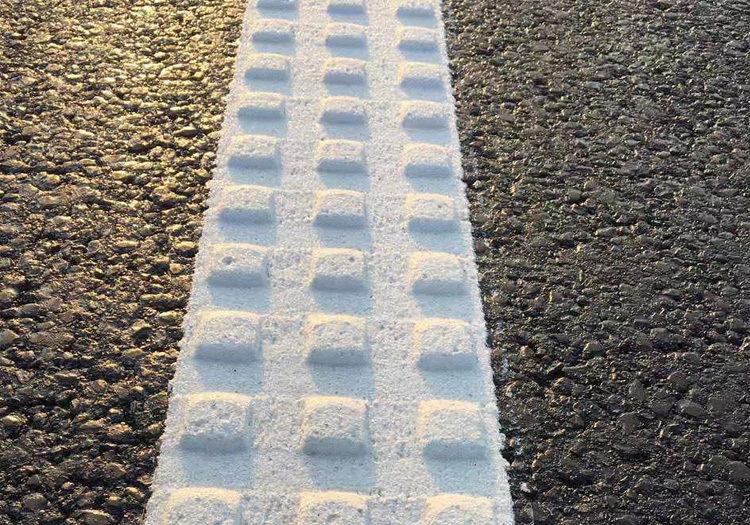
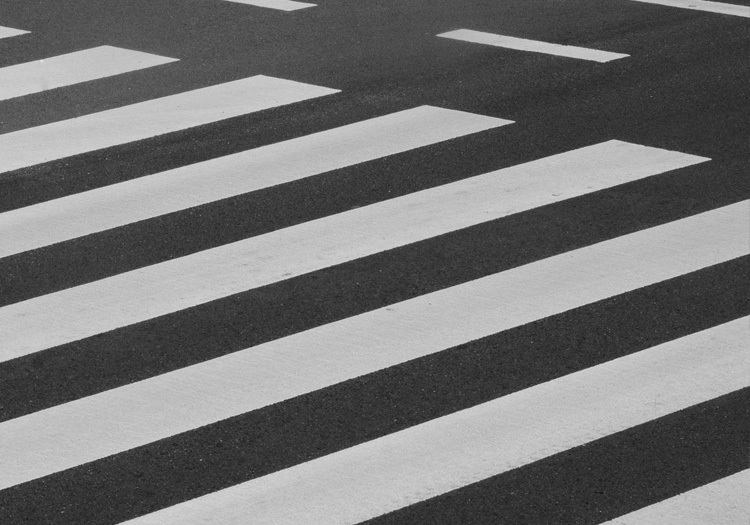



The construction sequence of hot melt coatings
【Summary Description】 Currently, the road marking paints used in our country are divided into three types: thermoplastic, water-based, and cold solvent-based. Traffic safety management departments use road markings to enhance traffic safety management, reduce accidents, and beautify urban roads, while eye-catching road markings depend on high-performance marking paints. With the modern construction's emphasis on environmental protection and the high demands for wear resistance, slip resistance, weather resistance, and durability of markings, low-cost thermoplastic marking paints have become the preferred choice for road marking paints in our country.
Construction Sequence of Hot Melt Coating
1. Road Surface Cleaning The important condition for the coating to bond firmly with the road surface is to keep the contact surface clean. Dust, mud, and moisture on the road surface are the main factors affecting the adhesion of the coating. ① First, protect the work surface where the marking lines need to be drawn, so that the line workers can clean the road surface. The entire work section should be thoroughly cleaned with brooms and scrapers, and accumulated debris should be removed with shovels. The road surface must be dry and free of standing water. ② Use a wire brush to remove dust from the road surface, and then use a bristle brush to clean it thoroughly. ③ Use a blower to blow the cleaned road surface 1-2 times to completely remove dirt from the gaps in the road surface.
2. Measurement and Layout ① Mark the positions and shapes according to the design drawings using measuring tools and white powder (line marking powder) on the road surface. ② The layout of the marking lines varies depending on the road structure and traffic conditions. Generally, the center point of the road should be measured first, and then the center line should be determined at intervals of 10-20 m. In curved sections, set the center points every 5-15 m along the radius of curvature. In the longitudinal direction of the road, use a length of 50 m as the correction unit. ③ The edge line of the lane can be measured from the center line, and generally, the width of the marking line should also be marked. The layout of pedestrian crossing lines, guiding marking lines, text markings, etc., should follow the design of the construction drawings.
3. Primer ① According to the requirements of the Ministry of Transport, newly paved asphalt roads may not require a primer, but in sections where the asphalt surface is contaminated, a primer (undercoat) can be applied to improve the adhesion between the road surface and the coating. ② Excessive or insufficient application of primer will reduce the adhesion between the road surface and the coating. Depending on the condition of the road surface and the characteristics of the primer, it is generally good to apply 65-230g of primer per square meter. Marking work can only proceed when the primer does not stick to tires and does not adhere to dust and sand. The curing time varies due to atmospheric temperature, road surface temperature, humidity, wind strength, primer composition, application amount, application method, and road surface water absorption. ③ When applying the primer, be careful to avoid omissions, especially in areas with significant road surface irregularities, where it may be appropriate to apply a little thicker in the depressions. The primer is specially designed and formulated for cement roads and is also suitable for asphalt roads. The amount used for construction varies depending on the road surface and should be adjusted accordingly. It mainly increases the bonding strength between the marking line and the road surface, increases plasticity, and delays cracking. It is an essential surface treatment agent in hot melt marking application. Theoretical dosage: 0.15㎏/㎡
The application amount of the primer, whether excessive or insufficient, will reduce the adhesion between the road surface and the coating. Depending on the condition of the road surface and the characteristics of the primer, it is generally good to apply 65-230g of primer per square meter. When applying, use a roller spray machine, etc., to spray the primer evenly after adjusting its concentration. Our company has launched three grades of primer based on ground differences: fast-drying type, enhanced type, and economical type.
The fast-drying type is suitable for relatively dense road surfaces and surfaces treated with diamond sand epoxy or curing agents, characterized by rapid drying that does not affect construction progress.
The enhanced type is suitable for loose road surfaces, characterized by strong adhesion and low application amount.
4. Coating The coating operation is the most critical step in marking construction and should be strictly controlled according to the operating procedures, properly controlling the temperature based on application amount and weather factors. ① The marking coating should be done after the primer deep agent has dried. If marking lines are drawn before the primer has dried, the solvent will penetrate the uncured coating, causing bubbles.Hot melt marking paint is solid powder at room temperature. During construction, the paint is put into a melting kettle, and the temperature inside the kettle is controlled between 180℃ and 210℃, melting while stirring. Once melted into a flowing state, it is placed into the insulated melting hopper of the marking machine. The melted paint is then introduced into the marking hopper and kept warm to maintain the melted state. Before marking, a pre-marking machine marks the position to apply the marking paint. When starting to mark, the marking hopper should be placed on the road surface. Due to a certain gap between the marking hopper and the ground, when the marking machine moves forward, a neat marking line is scraped out by automatic flow. The glass bead dispenser can automatically and evenly sprinkle a layer of reflective glass beads on the marking line.③ To ensure nighttime visibility, glass beads should be sprinkled on the marking line simultaneously during the coating process. Experience shows that glass beads with a diameter of 60%-80% submerged in the coating have the best reflective effect. When the paint temperature is high, the glass beads are sprinkled quickly, and they will sink into the coating; when the paint temperature is low, the glass beads are sprinkled slowly, and the coating is close to curing, making it difficult for the glass beads to adhere well to the coating, leading to poor reflective effects. When using the double bead sprinkling process, first sprinkle large beads, then small diameter beads. ④ Marking curing. From the perspective of adhesion and adjustment, it is best for the coating to cool naturally. If forced cooling is necessary, after coating, wait a moment and then sprinkle water.
Add WhatsApp: +8615013220400 or WeChat: 13600092611 to get the latest Price!
Related News


Convenient Navigation
Contact Us
Address: Kechuang Industry,Tianyi Village,Dongcong Town, Nansha District, Guangzhou City, Guangdong Province, CHINA
+86 13427557901 Ms Vivian
( Whatsapp/Wechat/Line:008613427557901 Skype:vivian34686 )
online message